
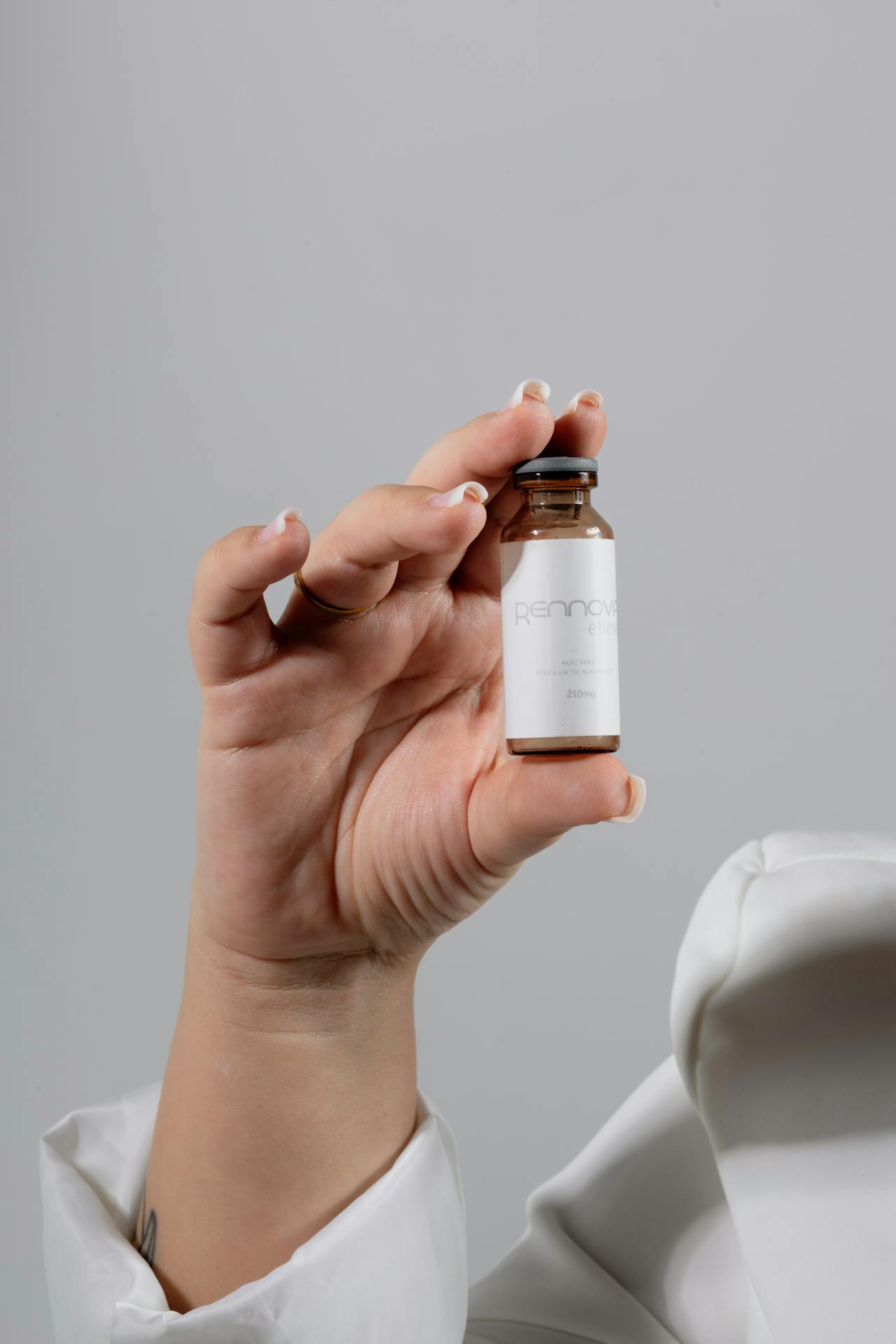
Retatrutide for Sale: What Researchers Should Verify Before Ordering
Quick answer: Retatrutide is an investigational triple agonist that has not been approved by any regulatory agency. Vials sold online are labeled for laboratory research only, not human use. Before ordering, verify the supplier’s third-party certificate of analysis, confirm the exact lot number, and understand that the FDA has issued repeated warning letters to sellers marketing this peptide for human consumption. Stack Research publishes lot-specific COAs for every batch, which is the baseline standard any researcher should expect.
If you type “retatrutide for sale” into a search engine, you will find dozens of storefronts offering vials with prices that range from $80 to $500. Some sites look polished. Some show certificates of analysis. A few even include third-party testing data. The problem is that the phrase itself does not tell you what you are actually buying, whether the vial contains what the label says, or whether the seller has any documentation to back up their claims.
This guide is written for laboratory researchers who need to evaluate a retatrutide supplier before placing an order. It covers what the published literature actually says about the compound, what the FDA has done about the online market, how to read a certificate of analysis without getting fooled by formatting, and what questions separate a transparent supplier from one that is hoping you will not ask.
What retatrutide is, and what it is not
Retatrutide is a synthetic peptide that acts as an agonist at three receptors: glucagon, glucose-dependent insulinotropic polypeptide (GIP), and glucagon-like peptide-1 (GLP-1). The discovery literature refers to it as LY3437943. Researchers study it because the triple mechanism produces effects that differ from single-agonist or dual-agonist peptides, and the published trial data has drawn significant attention.
In the TRIUMPH-1 Phase 3 trial, participants taking 12 mg of retatrutide lost an average of 70.3 pounds, or 28.3 percent of their body weight, over 80 weeks. The same trial reported that 45.3 percent of participants in the 12 mg group achieved at least 30 percent weight loss, a threshold historically associated with bariatric surgery. Eli Lilly’s published trial results describe these outcomes in detail, and the figures are consistent with earlier Phase 2 data.
What retatrutide is not, at least as of this writing, is an approved medicine. It has not received authorization from the FDA, the European Medicines Agency, or any other national regulatory body. Reporting from BBC Science Focus quotes the manufacturer stating that retatrutide “has not been approved by any regulatory agency and is legally available only through Lilly’s clinical trials.” Anything sold to consumers outside of a trial setting is, in the manufacturer’s own words, illegal, with no way to verify its safety, purity, or dosing.
That distinction matters for researchers. A vial labeled “retatrutide” and sold for laboratory research is not the same product as the clinical trial material. The trial material is manufactured under pharmaceutical-grade controls and administered under medical supervision. The research vial is a chemical reference sample. The two share a name and a mechanism, but they are not interchangeable, and no supplier should imply otherwise.
Why the online market exists, and what the FDA has done about it
The gap between trial access and public demand created a market. Public Citizen’s investigation into the peptide market found that since 2024 the FDA has sent 14 warning letters to companies selling retatrutide, yet as of May 2026, 11 of those 14 sellers continued to advertise the peptide, and eight continued to sell it outright. The report describes the situation as a regulatory failure in which enforcement has not kept pace with the volume of sellers entering the market.
The FDA’s position is straightforward. In a warning letter to Prime Vitality, Inc., the agency stated that retatrutide products offered for sale are unapproved new drugs introduced into interstate commerce in violation of the Federal Food, Drug, and Cosmetic Act. The letter notes that even when a seller labels the product “for research purposes only” or “not for human consumption,” evidence on the seller’s own website, including testimonials, dosing guidance, and social media content, can establish that the product is intended for human use. When that happens, the research-use disclaimer does not protect the seller.
The practical implication for researchers is that a supplier’s compliance posture is not just about the label on the vial. It is about the entire presentation: product descriptions, marketing copy, affiliate arrangements, and social media presence. A supplier that markets retatrutide through influencers who demonstrate injection techniques is not operating a research supply business, regardless of what the checkout page says.
The verification checklist every researcher should run before ordering
The difference between a defensible purchase and a gamble comes down to documentation. Here is what to check, in order.
1. Lot-specific certificate of analysis, not a generic sample
A certificate of analysis (COA) is only meaningful if it corresponds to the exact lot you are buying. A supplier that shows a single COA for “retatrutide” without tying it to a lot number is showing you marketing material, not a laboratory report. The COA should list the lot number, the testing laboratory, the report ID, the date the sample was received, and the date the results were published. If any of those fields are missing, the document cannot be used to verify the vial in your hand.
Stack Research publishes a lot-specific report for each configuration of its GLP-3 (RT) research peptide. The current lot documentation shows HPLC purity of 99.9 percent, measured content of 10.37 mg, and passing results for bacterial endotoxin and sterility. The report identifies the testing laboratory as Accumark Labs and includes a report ID that can be cross-referenced. That level of specificity is the standard, not a bonus feature.
2. What the COA actually tests
A certificate that lists only “purity: 99%” is incomplete. The useful fields are identity, purity by HPLC, measured content, endotoxin, and sterility. Identity confirms the peptide sequence matches the reference standard. Purity by HPLC shows the percentage of the sample that is the target compound. Measured content tells you how much peptide is actually in the vial, which can differ from the label. Endotoxin and sterility results speak to the handling conditions, which matter for any research application where contamination would invalidate results.
If a supplier’s COA omits measured content or endotoxin, that is a gap. It may not be a dealbreaker for every research context, but it is a data point about how thoroughly the supplier tests its material.
3. The research-use-only boundary
Every legitimate research peptide supplier uses the research-use-only (RUO) designation. The Stack Research research library explains how to read a certificate of analysis and how to compare purity against content, which are two different measurements. The RUO label means the product is not intended for diagnostic, therapeutic, or human use. It is a legal boundary, not a suggestion.
What to watch for is a supplier that uses the RUO label while simultaneously publishing dosing information, before-and-after photos, or customer testimonials about human use. That combination is what the FDA has cited in warning letters. A supplier that maintains the boundary consistently is easier to trust because it is not trying to have it both ways.
4. Pricing and configuration transparency
Retatrutide vials are typically sold in 5 mg, 10 mg, and 30 mg configurations. The price per milligram should be calculable from the listing. If the listing obscures the vial size, bundles it with accessories, or requires a minimum order to see pricing, that is friction that makes comparison harder. Stack Research lists its 10 mg GLP-3 (RT) vial at $119.90 with volume pricing available to verified research accounts. The product page shows the exact SKU and lot information alongside the price, which makes the listing auditable.
5. The regulatory context around the compound
Researchers studying retatrutide should be aware that the FDA has placed certain bulk drug substances on a list of substances that may present significant safety risks when used in compounding. The FDA’s compounding safety page provides the current list and the reasoning behind each inclusion. This is not a restriction on laboratory research, but it is context that shapes how the compound is discussed in regulatory and clinical settings.
The clinical trial record is also worth reviewing directly. ClinicalTrials.gov lists multiple active studies involving retatrutide, including trials for obesity, type 2 diabetes with renal impairment, and weight maintenance. Reading the trial protocols gives researchers a clearer picture of the dose ranges, endpoints, and safety monitoring that the clinical work involves. That context is useful when evaluating claims made by suppliers about what the compound “does.”
Video: Why retatrutide draws research attention
This video is a third-party explainer and is not affiliated with Stack Research. It provides general context on the compound’s mechanism and is not a substitute for the published literature or the product documentation.
How Stack Research approaches retatrutide documentation
Stack Research is a research peptide supplier that publishes lot-specific documentation for each product configuration. The company’s testing page describes the analytical methods used and the laboratories that perform the work. For researchers who need to verify a supplier before ordering, the relevant questions are whether the documentation is specific to the lot, whether the testing laboratory is named, and whether the results can be independently reviewed.
The GLP-3 (RT) product page shows the current lot report directly on the page, with the purity, measured content, endotoxin, and sterility results visible without requiring a separate download. The COA library collects the reports for all products so that researchers can compare documentation across configurations. The company maintains a research-use-only boundary throughout its product descriptions and does not publish dosing or administration guidance.
That last point is worth emphasizing because it is the dividing line the FDA has drawn in its enforcement actions. A supplier can sell research peptides and publish analytical documentation without crossing into human-use marketing. When a supplier stays on the research side of that line, the documentation becomes the primary basis for evaluating the product. When a supplier crosses the line, the documentation is no longer the main thing being sold.
Comparing retatrutide documentation standards
The table below outlines the documentation elements that separate a transparent listing from an incomplete one. It is not a ranking of suppliers but a framework for evaluating any listing you encounter.
| Documentation element | What a complete listing shows | Red flag if missing |
|---|---|---|
| Lot-specific COA | Report tied to the exact lot number, with testing lab named | Generic COA or no lot number |
| Identity test | Confirms peptide sequence matches reference standard | Purity percentage only, no identity result |
| Measured content | Actual peptide mass in the vial, not just label claim | No fill or content verification |
| Endotoxin and sterility | Pass/fail results for both | Omitted entirely |
| Research-use-only boundary | No dosing, administration, or human-use content | Testimonials, before/after photos, influencer dosing content |
| Price transparency | Vial size, price, and SKU visible together | Price hidden behind account creation or minimum order |
The table is not a guarantee. A supplier can produce all of these documents and still be selling a product that does not match the report, which is why independent testing services exist. But a supplier that cannot produce the documents at all is not worth the time it takes to evaluate further.
Common questions researchers ask before ordering
Is retatrutide legal to buy for research purposes?
Retatrutide is not an approved drug, so it cannot be legally sold as a medicine. Research peptides labeled for laboratory use occupy a different regulatory space, but the FDA has made clear that the research-use label does not protect a seller who markets the product for human use. Researchers should purchase only from suppliers that maintain the research-use boundary and provide analytical documentation.
What purity should a retatrutide COA show?
Purity by HPLC above 95 percent is the typical threshold for research-grade peptides. Many suppliers report 98 to 99 percent or higher. The purity figure is only meaningful alongside identity and content results. A vial can be 99 percent pure and still contain less peptide than the label claims if the fill is off.
How do I verify that a COA is real?
Check that the testing laboratory is named and that the report ID can be cross-referenced. Some laboratories publish verification portals where a report ID can be entered to confirm the document’s authenticity. If a supplier cannot tell you which laboratory performed the test, the COA cannot be independently verified.
What is the difference between retatrutide and GLP-3 (RT)?
GLP-3 (RT) is the product name Stack Research uses for its retatrutide research peptide. The compound is the same. The naming convention reflects the triple-agonist mechanism: glucagon, GIP, and GLP-1. Researchers should confirm the identity of any product by its COA, not by the brand name on the vial.
What should I do if a supplier’s listing makes health claims?
Treat it as a disqualifying signal. Health claims on a research peptide listing are the exact pattern the FDA has cited in warning letters. A supplier that describes what the peptide “does” for the body is marketing an unapproved drug, regardless of the research-use label elsewhere on the page.
Can I compare retatrutide documentation across suppliers?
Yes, and you should. The relevant fields are comparable across suppliers: purity, identity, measured content, endotoxin, sterility, and lot traceability. The guide to reading a certificate of analysis walks through each field and explains what a complete report should contain.
Disclaimer: This article is for informational purposes only and does not constitute legal, medical, or regulatory advice. Retatrutide is an investigational compound that has not been approved by the FDA or any other regulatory agency for human or veterinary use. Research peptides are sold for laboratory research purposes only. Nothing in this article should be interpreted as guidance for human use, dosing, or administration. Researchers are responsible for complying with all applicable laws and regulations in their jurisdiction. Statements regarding dietary supplements and research peptides have not been evaluated by the FDA. Consult a qualified professional before making decisions about any substance. Stack Research is a supplier of research peptides; this article is editorial content and is not a product endorsement.